TL;DR: Cameras at US gyms typically cover workout floors, the front desk, and entrances - and that footage can easily reveal health status, injuries, or simply the fact that someone regularly visits a given facility. Before a member, a power of attorney, or an insurer receives a copy, bystanders and background elements need to be blurred. In Illinois, there's an added layer of risk under the BIPA if the entry system uses biometrics. Gallio PRO automatically blurs faces and license plates, while tattoos, badges, or screens get redacted manually in the built-in editor - locally, with no detection logs. Download the free demo to try the process on your own footage.
Visual data anonymization is the practice of limiting how identifiable people are in photos and footage, using techniques like face blurring and, where needed, manual masking of other visual elements. At US gyms and fitness centers, this comes up mostly around footage from workout areas, the front desk, and entrances, and around how to respond to member requests for a copy of footage. The biggest risk isn't having surveillance in the first place - it's disclosing too broad a slice of footage that shows other people, their faces, or a sensitive situational context.
For fitness chain owners and compliance teams, the safest operational approach separates two processes. The first is security footage - recorded for safety and incident purposes. The second is publishing or sharing a copy of that material beyond a narrow circle of authorized recipients. In the second process, redaction obligations are typically much broader.
Download the free demo →
Why Gym Monitoring Needs a Sharper Approach Than Many Other Facilities
A gym is a space where footage very easily reveals information about health, physical condition, injuries, mobility limitations, pregnancy, rehabilitation, or simply the fact that someone regularly attends a particular facility. Even if the camera doesn't record medical data directly, the context of the frame alone can be highly private for a member.
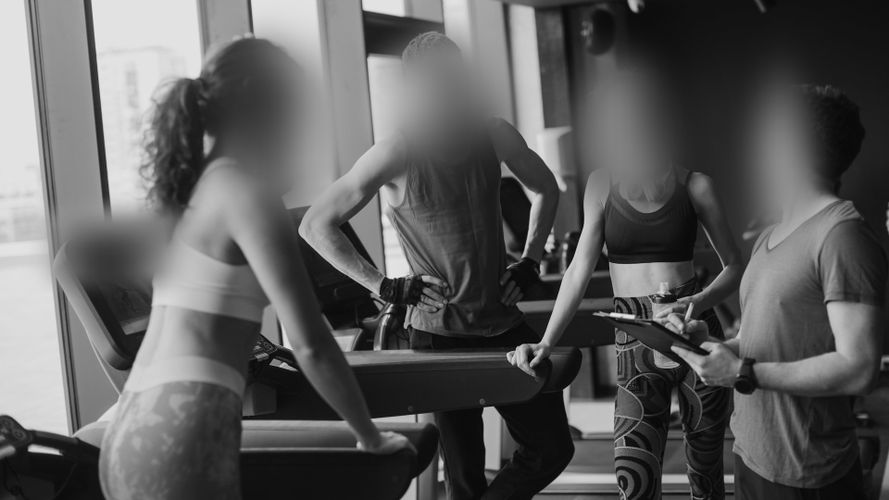
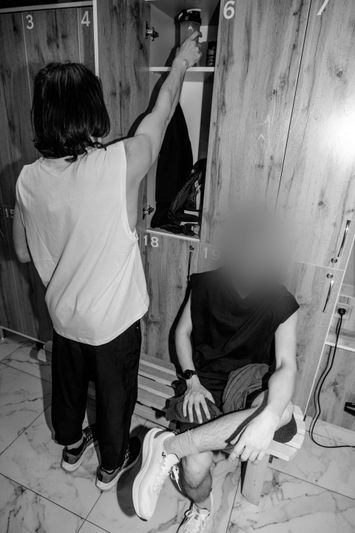
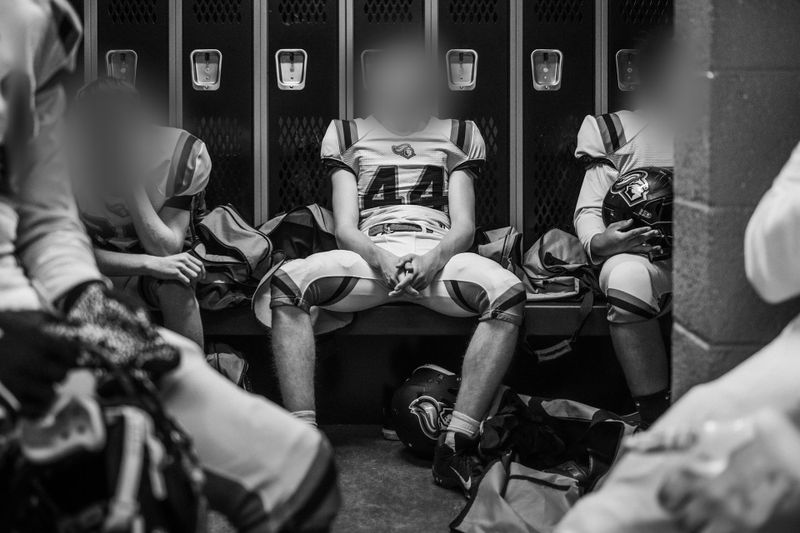
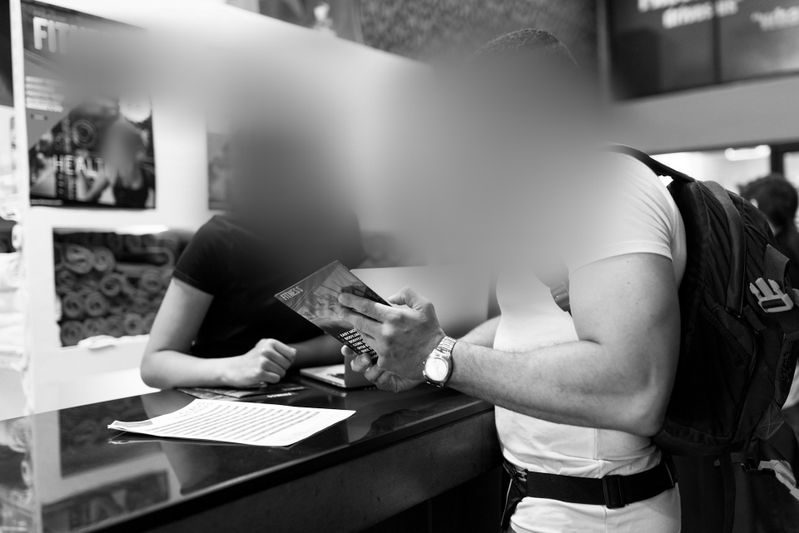
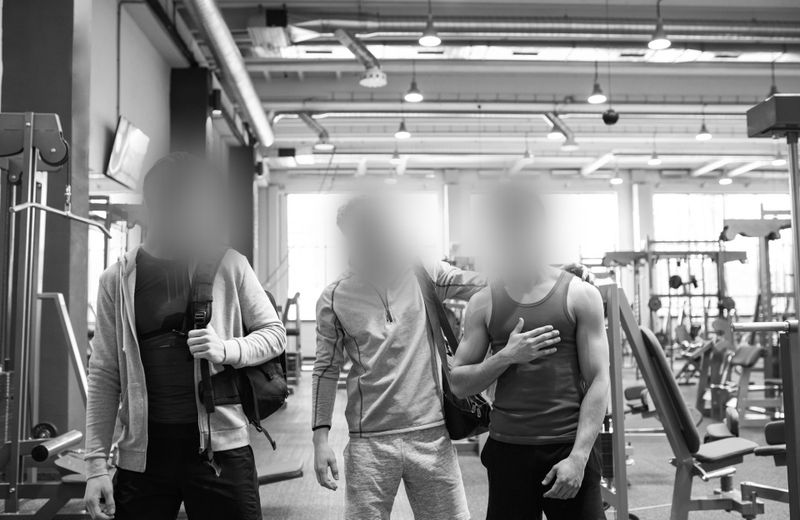
This applies especially to three zones. On the workout floor, the risk comes from a high number of people in frame and the possibility of linking a face to a specific workout or behavior. At the front desk, the problem is often lines, screens, staff badges, and documents shown at check-in. In locker rooms and changing areas, the issue is sharpest. In compliance practice, cameras in these spaces are typically treated as the highest-risk area, and many organizations adopt a policy of avoiding them entirely or very strictly limiting their coverage.
When a member asks for a copy of footage, organizations often work through four questions: (1) does the material actually show the requester and the specific incident; (2) how many other members or staff appear in frame; (3) does the background disclose excess information - a front-desk screen, a class schedule, lockers, tattoos, a logo on clothing, or a potentially embarrassing situation; (4) can a redacted version be prepared instead of raw footage.
In practice, it's rarely an all-or-nothing decision. It's most often about the scope of image redaction. This is exactly where visual data anonymization becomes central to the process.
The most common scope of redaction covers the faces of all bystanders. Face blurring is the baseline measure for limiting identification. If a parking lot entrance or a driveway zone appears in frame, license plate blurring often comes into play too, to avoid disclosing vehicle plate numbers. That matters especially when material is about to leave the security system and go to a member, a power of attorney, an insurer, or the media.
A second level of redaction covers elements that software typically doesn't detect automatically: tattoos, company logos on clothing, name badges, documents visible at the front desk counter, and screen content. If those elements make identification possible or disclose too much context, organizations often apply manual masking to specific parts of the frame.
This is where Gallio PRO is useful, as on-premise software for visual anonymization. From a process standpoint, a few limits and strengths are worth highlighting. Gallio PRO automatically blurs only faces and license plates, doesn't blur full silhouettes, and doesn't perform real-time anonymization or video-stream anonymization. It doesn't automatically detect company logos, tattoos, name badges, documents, or screen content, but those elements can be blurred manually in the built-in editor. It also matters for organizations that Gallio PRO doesn't collect logs containing face or license plate detection data, or logs containing personal or sensitive data.
Redaction Assessment Table for Typical Fitness Facility Zones
Zone | Most common risk | What's usually blurred | Operational notes |
Workout floor | Many faces in frame, private training context | Bystanders' faces, sometimes tattoos or distinctive clothing elements | Worth trimming the clip to the necessary time and frame |
Front desk | Screens, documents, badges, customer lines | Bystanders' faces, name badges, documents and screens handled manually | Face blurring alone often isn't enough |
Entrance and parking | Identification of people and vehicles | Faces and license plates | License plate blurring is often necessary for broader sharing of material |
Locker rooms and changing areas | High level of privacy intrusion | Organizations generally take a very restrictive approach, and often avoid sharing this footage at all | Highest-risk area, requiring case-by-case review |
Illinois BIPA: Why Gyms Should Pay It Particular Attention
In the US market, the Illinois Biometric Information Privacy Act (BIPA) is particularly significant. For the fitness industry, it's especially important because gyms and training studios sometimes use facial recognition technology, hand-geometry scans, or other biometric methods for access control. In that model, the legal risk no longer concerns only the video image itself, but also the processing of biometric identifiers [1]. That's exactly why Illinois is a heightened-compliance-sensitivity state for fitness clubs.
If monitoring or a connected entry system uses biometric mechanisms, organizations often take a more conservative approach to responding to a member request for footage. That includes checking more carefully whether the clip being handed over reveals how the system works, the terminal interface, or other users' data. Where risk is high, the safer practice is often to prepare a shorter, more heavily redacted excerpt rather than a full export.
- Confirm the date, time, location, and purpose of the request.
- Secure the original and create a working copy.
- Redact the footage in Gallio PRO using face blurring, license plate blurring, and manual masking of elements that could identify people or disclose excess information.
- Hand over the redacted version along with a brief note explaining that the scope of disclosure was limited to necessary material.
Don't promise full automation in your response. In practice, it's safer to state that auto-detection covers faces and license plates, while other elements need manual review. That description is accurate and better reflects the technical reality.
If your team wants to test this workflow in practice on your own CCTV material, you can do so by downloading the demo version and testing the anonymization process on a working copy of footage.
See how Gallio PRO anonymizes video footage.
Material published on social media, on a website, in PR communications, or in response to a press inquiry should go through stricter review than material staying within the security department. The reason is simple: once published, footage takes on a life of its own - it can be copied, cross-referenced with other sources, and used to identify club members.
Organizations therefore often apply three filters: (1) minimizing clip length; (2) narrowing the frame as much as possible; (3) redacting the faces of everyone who isn't the central subject of the material.
Even if the central subject is the member making the request, redaction typically still covers all bystanders.
On-Premise Software and Limiting Material Exposure
For fitness chains and franchise operators, the deployment model matters too. On-premise software lets you process footage in a controlled organizational environment, without unnecessarily transmitting files outside company infrastructure. From a process-security standpoint, this matters especially for footage from the front desk and workout areas, where material can contain a high density of people and many incidental visual identifiers.
If you need a deployment model across multiple locations, an on-premise working policy, or an analysis of a specific fitness-club compliance case, it's worth contacting the team to discuss the scenario individually.
The most common mistake is assuming that blurring faces alone always solves the problem. In some cases it does. In others it doesn't. A distinctive tattoo, a trainer's company name on a T-shirt, a front-desk screen showing member data, or a vehicle plate in the background can still lead to identification. That's why face blurring is a starting point, not a universal answer for every case.
A second mistake is using tools marketed as fully automating detection of all personal data. That kind of promise is usually too broad. It's safer and more accurate to distinguish between automatic detection of faces and license plates and manual masking of the remaining visual elements.
Consent Exceptions From Other Frameworks - and Why They Don't Transfer Directly to US Gyms
In materials on likeness and image rights, three common exceptions to the consent requirement appear: when the individual is a public figure, when their likeness is only an incidental part of a wider scene - particularly a public event, or when the individual received payment for the use of their likeness. These exceptions come from image-rights legal frameworks, and shouldn't be mechanically applied to surveillance at a US fitness club.
A typical gym isn't a public event, and CCTV footage usually isn't intended for public exposure without further review. That's why, operationally, case-by-case review and conservative redaction remain the key practice - not reaching for exceptions built for a completely different context.
FAQ: Video Surveillance at US Gyms and Fitness Centers
Can a US gym give a member a copy of surveillance footage?
It depends on the specific state, the purpose of the request, and the content of the frame. A common practice is to release a redacted version rather than a raw export when other people are visible in the footage.
What usually needs to be blurred before handing footage to a club member?
Most often, bystanders' faces. If vehicles are visible in frame, license plate blurring is often useful too. You also need to assess tattoos, screens, documents, badges, and other elements that could enable identification.
Is face blurring alone always enough?
No. At the front desk and near the entrance, it's often not enough, since documents, screen content, name badges, or vehicle plate numbers can also enable identification.
Does Gallio PRO blur full silhouettes or work in real time?
No. Gallio PRO doesn't blur full silhouettes and doesn't perform real-time anonymization or video-stream anonymization. It automatically blurs faces and license plates, and other elements can be masked manually.
Does Gallio PRO automatically detect tattoos, company logos, and documents?
No. Automatic detection covers faces and license plates. Tattoos, company logos, name badges, documents, and screen content need manual redaction in the built-in editor.
Why is Illinois BIPA so important for the fitness industry?
Because gyms, more often than many other businesses, use entry and identification systems that can include a biometric component. That significantly raises compliance risk, especially when surveillance footage intersects with a member identification process.
Does the software store logs with face detection data?
No. Gallio PRO doesn't collect logs containing face or license plate detection data, or logs containing personal or sensitive data.
Written by the Gallio PRO team - data-protection and video-engineering specialists building anonymization software used in fitness, security, and retail workflows. This article is general information, not legal advice.
Preparing footage to hand over to a member or to publish? Test the process on your own files. Download the free Gallio PRO demo →