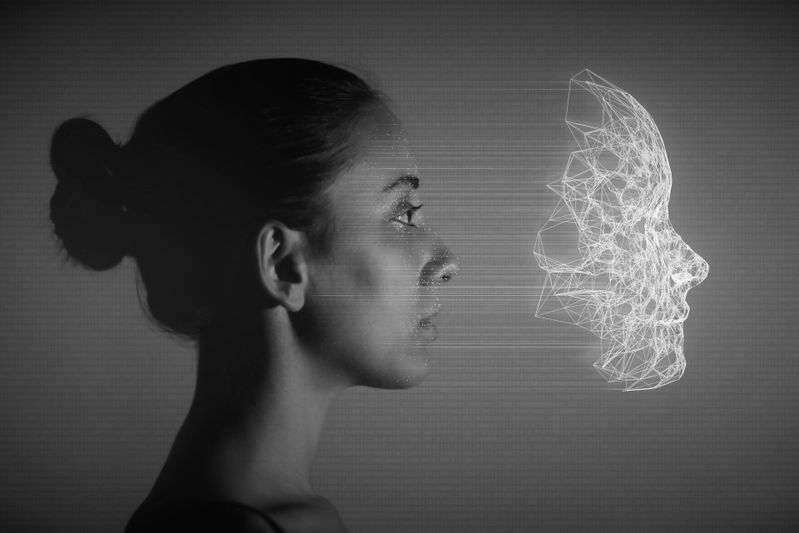
Visual data anonymization means altering images or videos so that individuals cannot be reasonably identified. In practice this involves face blurring and license plate blurring applied before publication or wider internal sharing. Under the Illinois Biometric Information Privacy Act (BIPA), a scan of face geometry is a biometric identifier while a mere photograph is not. If a workflow can extract or derive face templates from visual material, the resulting biometric handling can trigger BIPA duties. Redacting faces in advance is a common compliance approach to reduce this risk, particularly when content is intended for public release. For teams seeking an on-premise software option dedicated to visual redaction rather than biometric recognition, it is useful to check out Gallio PRO.
What BIPA Regulates - and why video publishers care?
BIPA defines biometric identifiers to include a scan of hand or face geometry and biometric information derived from such identifiers. Photographs and video footage themselves are excluded, but a process that analyzes images to create or compare face geometry is covered [1]. The Illinois Supreme Court in Rosenbach held that a statutory violation is actionable without showing additional harm [2]. In Cothron, the Court interpreted claim accrual in a way that can multiply exposure when repeated scans occur, while also emphasizing that damages questions are distinct and may be addressed by other legal doctrines [3].
Publishing teams in marketing, PR, public sector communications, and compliance functions often handle people-centered footage. If they store, share, or process that footage in ways that could enable or invite biometric analysis - for example by using third-party analytics that create templates - BIPA risk becomes material. Visual data anonymization that makes a scan of face geometry impracticable to derive can support risk mitigation, though effectiveness is context-dependent.
Face blurring as a common compliance approach
Organisations frequently adopt face blurring across outbound assets when footage contains bystanders or employees and there is no need to identify them. This reduces the chance that a scan of face geometry could be created from the released material. Where teams rely on vendors or platforms that embed computer vision features, deploying redaction upstream can narrow exposure before any biometric-capable tools touch the data. The impact of redaction on BIPA risk is context-dependent - for example, oblique angles, partial occlusions, or high-resolution originals may call for stronger or larger blur masks. Testing on representative footage is a prudent business practice.
License plate blurring is complementary. While license plates are not biometric identifiers, license plate data can be personal data and is regulated in certain U.S. contexts. For example, California’s ALPR statute governs the collection, use, maintenance, sharing, and security of automated license plate reader information [4]. Redacting plates in published material is a conservative approach to reduce linkage risks and downstream complaints.
Publishing policy exceptions often recognized
Many media and communications policies treat the following as exceptions to routine face anonymization. Applicability is jurisdiction- and context-dependent, and teams should embed them into their internal guidelines with care:
- the subject is a public figure
- the image of a person forms part of a broader scene, particularly a public event such as a concert, sports event, or assembly
- the person received remuneration for the use of their image
Capabilities that matter for practical redaction
Effective visual data anonymization depends on detection coverage, ease of review, and deployment model. An on-premise software workflow avoids transferring raw footage to external processors and supports data minimization. Gallio PRO is purpose-built for visual redaction - it performs face blurring and license plate blurring and does not carry out facial recognition or any identification. It does not provide real-time anonymization and does not perform full-body blurring. The software automatically detects only faces and license plates. It does not automatically detect corporate logos, tattoos, name badges, documents, or monitors, but these can be redacted manually using the built-in editor, which is designed to be straightforward. The software does not create or store logs containing face or plate detections, and it does not collect logs that contain personal or sensitive data. For teams evaluating such a workflow, consider the on-premise option and download a demo to validate on representative clips.
Scenario | Biometric risk under BIPA | Recommended visual data anonymization | Business practice |
Street marketing video featuring passersby | Present if footage is used in a way that involves deriving or using scans of face geometry [1] | Face blurring of non-consenting bystanders | Adopt a standard redaction pass before public release |
Workplace highlights video with employees | Present if tools, analytics, or vendors scan faces or derive face geometry | Face blurring unless releases are on file | Keep signed releases with retention limits - otherwise blur |
Publishing dashcam or city footage | Potential face geometry risk for pedestrians if used for face-geometry scanning; plate data regulated in some states [4] | Face blurring and license plate blurring | Use on-premise processing and QA on varied lighting and angles |
User-submitted selfie contest montage | Lower if explicit consent covers biometric processing and if no face-geometry scanning occurs; still context-dependent | No blur if consent and scope are clear - otherwise blur faces | Verify scope of consent and avoid creating or storing templates |
Vendor demo clip shared on social media | Present if vendor tools could create or compare face templates | Face blurring of all bystanders | Redact before any third-party review or upload |
Operational checklist for U.S. teams
- Map where images and videos originate and where they are published.
- Define a redaction policy that defaults to face blurring for non-essential identities and to license plate blurring for external releases.
- Prefer on-premise software to minimize transfers and to keep raw footage controlled - evaluate with download a demo.
- Implement a two-step review - automatic detection for faces and plates, then a manual sweep for logos, tattoos, name badges, and screens using a simple editor.
- Minimize retention of unredacted originals and restrict access - if a vendor must receive footage, share already redacted copies.
- Document the workflow for audits and train staff on when the three exceptions apply.
For guidance on deployment fit, integration, or security reviews, teams can contact us.
FAQ: BIPA Video Redaction Compliance: Face Blur and Biometric Risk in the U.S.
Does face blurring make BIPA inapplicable?
Not automatically. BIPA applies to scans of face geometry and related biometric information. Robust blurring that prevents a scan from being created can reduce risk, but results are context-dependent and should be validated on representative content [1].
Is license plate blurring a BIPA requirement?
No. BIPA focuses on biometrics. License plate blurring addresses other U.S. privacy risks and laws that regulate plate data capture and sharing, such as California’s ALPR statute [4].
Is on-premise redaction better than cloud for BIPA risk?
It can support data minimization by keeping raw footage in-house. This is a common compliance approach for teams that wish to avoid transferring material that could enable biometric analysis by external processors.
Are thumbnails or short clips exempt?
No categorical exemption exists in BIPA based on file length or resolution. If a scan of face geometry is derived or used as part of processing, risk exists. Applying visual data anonymization remains prudent.
How accurate must blurring be?
There is no statutory threshold. A common business practice is to ensure that the blur prevents practical identification and makes extraction of face geometry unreasonable. This is context-dependent and should be tested.
Can Gallio PRO automatically blur tattoos, logos, or name badges?
No. Automatic detection covers only faces and license plates. Tattoos, logos, name badges, documents, and screens are handled manually using the built-in editor.
Does Gallio PRO perform facial recognition?
No. Gallio PRO is for visual redaction - it does not perform face recognition or identity matching, and it does not collect logs containing face or plate detections.