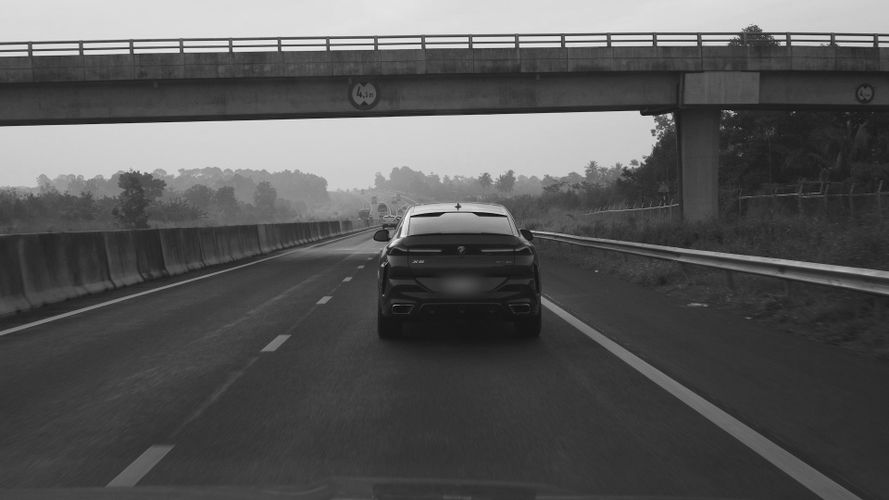
Summary: Whether you must blur license plates depends on where you operate. In Western Europe it is effectively mandatory; in the UK the ICO expects redaction before disclosure; in Poland the position is genuinely split; and in the US there is no general rule, but several frameworks make redaction the safe default. If you publish or share footage that contains vehicles, the practical answer is usually "blur them." Gallio PRO detects and blurs faces and license plates automatically across photos and video, runs on your own machine, and keeps no logs of what it detects.Download the free demo to try it on your own footage.
License plates are a borderline identifier: on their own they're a string of characters, but combined with other data - most obviously a vehicle-registration lookup - they can point to a specific person. That's exactly why the answer to "do I have to blur them?" isn't a flat yes or no. It turns on your jurisdiction, your purpose, and who will see the footage. This guide breaks it down by region and shows how to handle it in practice.
Are License Plates Personal Data? It Depends Where You Are
This is the crux, and it genuinely differs by region. Don't assume the EU answer applies everywhere - a large share of readers and footage involve the US, where the legal logic is different.
The takeaway: outside the EU there may be no statute literally ordering you to blur a plate, but redaction is the consistent safe default - and it's almost always cheaper than a complaint, a dispute, or a re-identification incident.
When Do You Actually Need to Blur License Plates?
Use this as a quick decision framework. Blur the plate when:
You're publishing publicly - social media, a website, real-estate listings, or marketing - and vehicles appear without the owner's consent.
You're repurposing surveillance footage beyond its original security purpose (e.g. using CCTV clips for promotion).
You're sharing footage externally - with a vendor, an insurer, or the public - and the plate isn't necessary for that purpose.
You operate in or publish to the EU/UK, where identifiability plus no legal basis points to redaction.
You're unsure of your jurisdiction's position (e.g. Poland) - redact by default rather than litigate the gray area.
You may be able to leave a plate visible where you have a clear legal basis: explicit consent, a genuine legitimate interest that outweighs the individual's rights, or a specific law-enforcement purpose. Document that basis either way.
How to Blur License Plates with Gallio PRO (Step by Step)
Install Gallio PRO. Download the free demo fromgallio.pro/download . It runs on your own machine, so the unredacted footage never leaves your environment.
Import your photo or recorded video. Add the file with the vehicles you need to anonymize. Gallio PRO processes saved files, not live or real-time streams.
Run automatic detection. Gallio PRO automatically finds and blurs license plates and faces across the frame and tracks them as vehicles move. These two are the only elements it detects automatically.
Catch anything else in the built-in editor. A VIN on the windscreen, a name on a fleet door, a document on the dashboard - these aren't auto-detected, but you can blur them by hand in Gallio PRO's built-in editor.
Set strength, review, and export. Choose blur or pixelation, confirm every plate is unreadable, and render the file. Gallio PRO stores no personal data and keeps no detection logs.
Blurring vs Anonymization: Is There a Difference?
The terms get used interchangeably, but there's a useful distinction. Blurring is the visual technique that makes the characters unreadable while the plate area stays visible. Anonymization is the broader goal - any method (blurring, removal, replacement with fictional characters) that prevents the owner from being identified. From a compliance standpoint the method matters less than the result: it must be irreversible. If the original characters can be reconstructed by technical means, you haven't anonymized anything.
What Are the Consequences of Getting It Wrong?
In the EU/UK, processing plate data without a basis can draw complaints to a supervisory authority and, in serious cases, fines up to €20 million or 4% of global annual turnover (GDPR Art. 83). Data protection authorities have sanctioned businesses for publishing customer vehicles online with visible plates, treating it as unnecessary processing. In the US, the exposure is different in shape - re-identification, doxxing risk, ALPR-data rules in states like California, and contractual or reputational fallout - but it's real. Across regions, the cost of redacting up front is trivial next to the cost of an incident.
Choosing License Plate Blurring Software: What to Check
Real automation. The tool should detect and track plates across angles, lighting, and movement - not make you mask each frame. Gallio PRO does this for plates and faces.
On-premise processing. For sensitive footage, you don't want to upload the unredacted original to someone else's servers. Gallio PRO keeps the file on your machine.
No detection logging. Anonymization software that logs what it found undercuts the point. Gallio PRO keeps no detection logs and stores no personal data.
A manual editor for the rest. VINs, fleet branding, documents - you'll want a quick way to blur those by hand.
A free trial. Test detection on your own footage before committing - start with theGallio PRO demo .
Public-Sector and Law-Enforcement Footage
Agencies handle the highest volumes and the trickiest transitions - footage collected for security or enforcement, then released to the public or media. Publishing dashcam or CCTV clips on a platform like YouTube is a new purpose beyond the original collection, and typically calls for plate (and face) redaction. Practical protocols help: define when plates must be blurred, redact before footage leaves the secure environment, prefer on-premise tooling to preserve chain of custody, and train the people who handle the data.See how Gallio PRO fits high-volume redaction workflows.
FAQ: License Plate Blurring
Do you legally have to blur license plates?
It depends on jurisdiction and purpose. In Western Europe it's effectively mandatory; the UK ICO expects redaction before disclosure; Poland's position is split (UODO/EDPB say yes, the NSA has said plates aren't personal data); the US has no general rule but several frameworks make redaction the safe default.
Is a license plate personal data under GDPR?
Often yes - when the person is reasonably identifiable, including by combining the plate with other data such as a registration lookup. Identifiability and context decide.
Do I have to blur plates in the US?
There's no blanket federal requirement, but the DPPA restricts access to the DMV record that links a plate to its owner, California's CCPA/CPRA can treat a plate as personal information, and several states regulate ALPR data. Redaction before publishing is the safe choice.
Can Gallio PRO blur license plates automatically?
Yes. Plates and faces are detected and blurred automatically across photos and recorded video; anything else can be blurred manually in the built-in editor.
Does Gallio PRO blur plates in real time or in a live stream?
No. Gallio PRO works on recorded files and does not perform real-time or live-stream anonymization.
What's the difference between blurring and anonymization?
Blurring makes the plate unreadable while the plate area stays visible; anonymization is any method that prevents identification. Either way it must be irreversible to count.
Do different countries have different rules?
Yes - significantly. The EU, UK, Poland, and the US take different positions on whether a plate is personal data and when redaction is required, so check the rules for the jurisdiction you publish to.
Co-Founder of Gallio PRO, explores how new technologies affect society, politics, law, and ethics. He holds a Ph.D. in Political Science from the University of Wrocław and an MBA from the Wrocław University of Economics. He is interested in how technology has influenced our history and is shaping our future.