

Hotel Security Footage and Guest Privacy: What to Blur in Lobby, Elevator, and Parking Video
In hotel settings, visual redaction is commonly used to mask elements in images or videos that could identify a person or a vehicle before footage is shared outside the security function. In practice, this usually means face blurring and license plate blurring before footage is used for marketing, PR, safety briefings, incident summaries, or stakeholder communications. The goal is to reduce re-identification risk while preserving the usefulness of the footage. For teams that want a quick terminology baseline before building a workflow, the Glossary is a practical starting point.

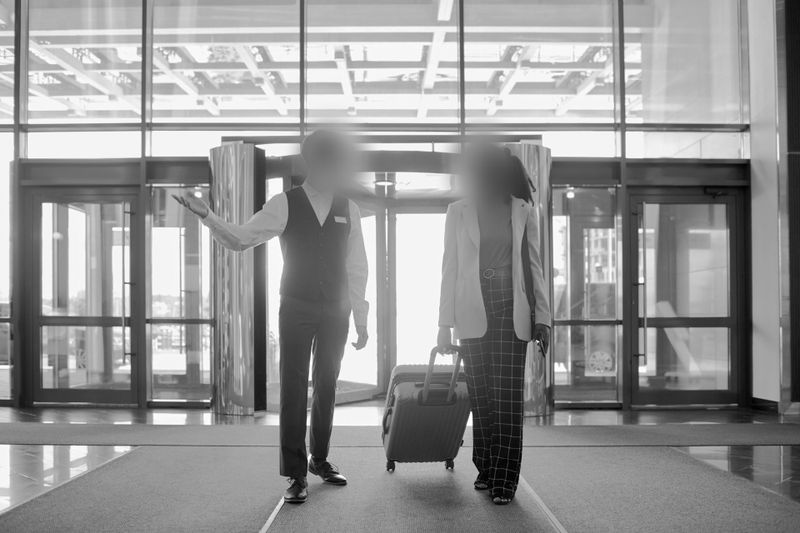
What to blur by area - lobby, elevator, and parking
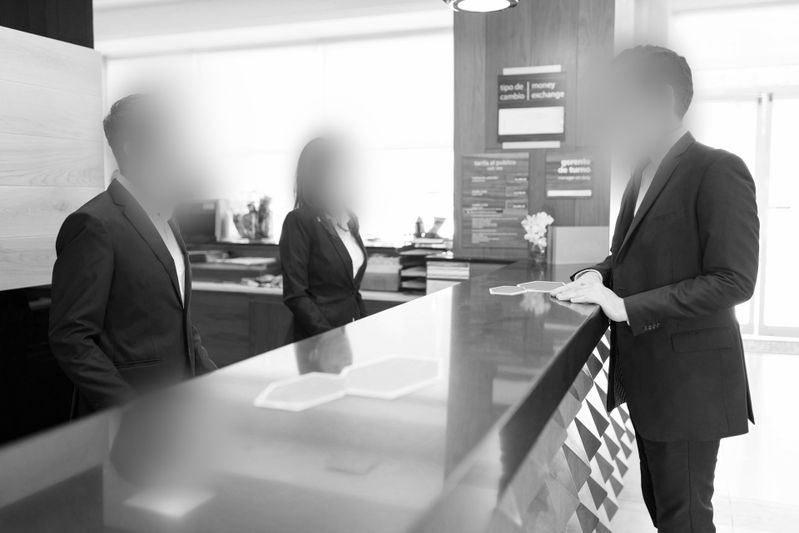
Publishing raw security footage is rarely a sound business practice. Hotels typically apply face blurring in guest-facing spaces and license plate blurring where vehicles are visible. Additional elements may require manual redaction when they uniquely identify a person or reveal private information.
Area | Primary items to anonymize | Recommended approach | Notes and edge cases |
Lobby | Faces of guests and visitors | Automated face blurring plus manual review | Consider manual blur for visible name badges, distinctive tattoos, or screens showing guest data when present. |
Elevators and elevator lobbies | Faces in confined spaces | Automated face blurring, careful frame-by-frame checks | Mirrors can reflect faces from multiple angles, so perform manual checks for missed faces or reflections. |
Parking and porte-cochère | License plates and faces near vehicles | Automated license plate blurring and automated face blurring | Manual blur may be needed for unique vehicle wraps, bumper stickers, or company logos that can identify a person or organization. |
US risk framing when publishing hotel footage
In the United States there is no single federal privacy law covering all publishing scenarios. Instead, hotels operate against a patchwork of state privacy, biometric, and right-of-publicity rules, along with general consumer-protection guidance. The Federal Trade Commission has encouraged privacy-by-design practices, including data minimization and more deliberate handling of facial imagery [1]. Technical sources such as NISTIR 8053 treat de-identification as a risk-reduction measure rather than a guarantee of anonymity [2].
Rights of publicity and privacy statutes in several states restrict the commercial use of a person’s likeness without consent. California Civil Code §3344 and New York Civil Rights Law §§50-51 are commonly cited examples when hotels are considering the publication of recognizable guest footage for marketing or PR [4][5]. If footage includes biometric identifiers used for identification, specialized statutes such as Illinois BIPA may also be relevant depending on the facts and the processing involved [7]. In practice, many organizations avoid publishing unblurred faces where that could add unnecessary biometric-privacy or publicity risk. Actual obligations vary by state, by purpose of use, and by context.
It is also important not to overstate what hotel footage redaction solves. Blurring reduces identifiability, but it may not eliminate it in every case. Distinctive clothing, location context, companions, audio, or captions can still contribute to recognition. That is why many hotel teams apply face and plate blurring as a default visual safeguard, then review the rest of the frame for other identifiers before release.
The California Consumer Privacy Act, as amended by the CPRA, is a broad consumer privacy law focused on data handling rights and business obligations. It is not a right-of-publicity statute and does not itself create a universal rule about whether identifiable hotel security footage may be published. It is more commonly relevant to notice, retention, access/deletion rights, and vendor sharing questions, depending on the facts [6].
Common image-rights exceptions often cited
- the person is a public figure, depending on jurisdiction and context
- the image is part of a broader scene, particularly a newsworthy or public-interest context
- the person received remuneration and granted permission, typically through a release
Whether any exception applies in the United States is context-dependent and varies by state statute and case law. Many hotels still apply face blurring by default for publishing scenarios to reduce disputes and avoid relying solely on exceptions. Where marketing use is contemplated, obtaining a signed release remains a common compliance approach.
Scoping visual data anonymization for hotels
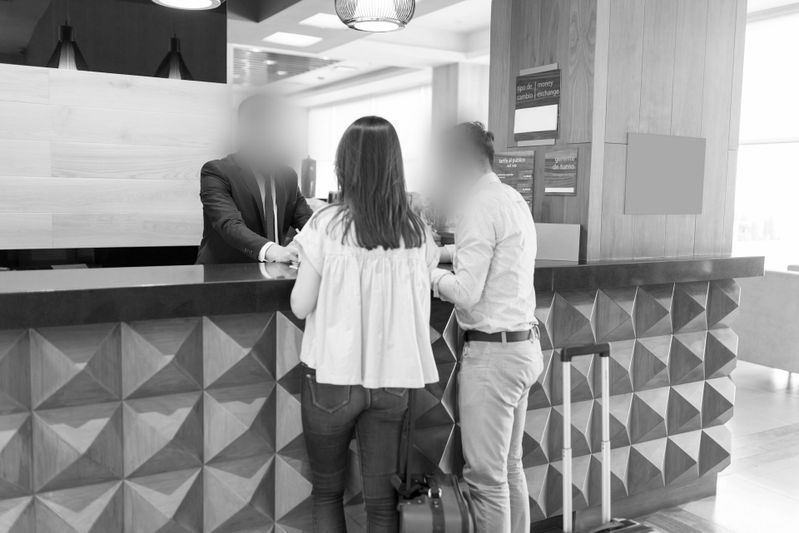
A conservative starting point for publishing is narrow and consistent scope: blur faces, blur license plates when vehicles are visible in parking footage, and review the remaining frame for unique identifiers. Good practice is to document the decision to publish, the purpose, and the minimization steps taken. Teams typically keep an unedited version in restricted storage for security needs and use a separate sanitized version for public release.
Workflow - from raw footage to publishable clip
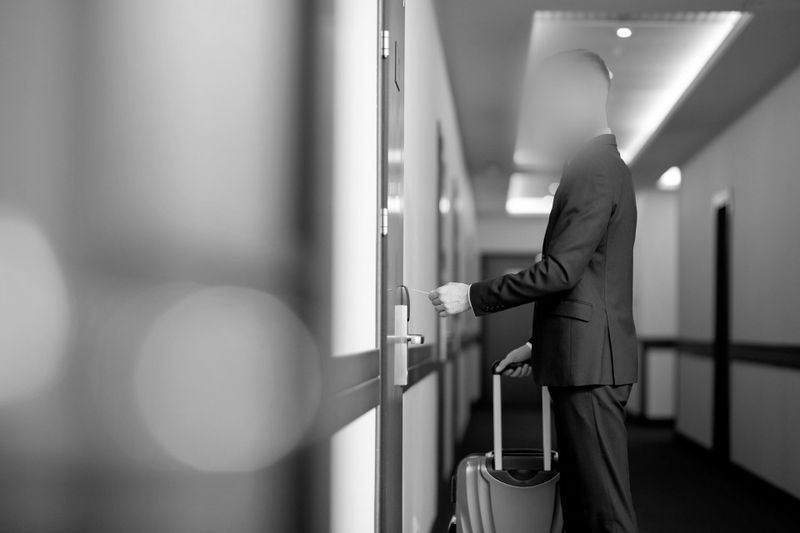
Reliable outcomes come from a predictable process. A common five-step workflow is below.
- Ingest and segment footage - extract only the necessary clips to minimize exposure.
- Run automated face blurring and license plate blurring - then review quickly to confirm coverage.
- Manual redaction pass - apply targeted blurs to logos, tattoos, name badges, and on-screen documents when they would identify a person or reveal private details.
- Quality assurance - check mirrors, glass reflections, and background screens frame by frame in short segments.
- Export and document - save a sanitized copy for publishing and log the anonymization steps applied.
When selecting tools, many hotel teams prefer on-premise software to avoid sending raw footage to third parties. Teams that want to validate the workflow with representative lobby and parking clips can start with the demo and review how the process fits their internal approvals.
How Gallio PRO supports hotel teams?
Gallio PRO is on-premise software for visual redaction in photos and videos. Its automatic layer is intentionally limited to face blurring and license plate blurring. It does not blur entire silhouettes, and it does not automatically detect company logos, tattoos, name tags, documents, or content shown on computer screens. Those elements require a manual pass in the built-in editor. The software is designed for file-based workflows rather than live stream processing, and it does not store logs containing face detections, license plate detections, or other personal or sensitive data.
For hotel brands that regularly publish lobby, elevator, or parking visuals, that limited and explicit scope can be a practical advantage: it reduces the temptation to over-rely on automation and keeps reviewers focused on the manual checks that still matter. Teams comparing how similar workflows are applied in production environments can also review the Case Studies section for additional context. For deployment details, policy alignment, or implementation questions, the most direct next step is the contact page .

FAQ - Hotel Security Footage and Guest Privacy
Is face blurring always necessary before publishing hotel security footage?
Many organizations treat face blurring as a prudent default for public release. It reduces re-identification risk and helps navigate state right-of-publicity and privacy considerations in the United States. Exact requirements remain context-dependent and can vary by state and by the purpose of publication, such as marketing versus an incident update.
Are license plates considered personal information in the US?
Classification varies by law and context. In many privacy frameworks and state laws, a license plate can be treated as personal information, or linked to personal information, when it can reasonably be associated with an individual or household. Many hotels blur plates as a practical risk-reduction measure when publishing parking footage.
Does Gallio PRO anonymize in real time or over live video streams?
No. Gallio PRO processes files offline and is intended for controlled, file-based workflows rather than live video stream anonymization.
What if a clip includes logos, tattoos, or a staff name badge?
Those elements are not detected automatically. They should be reviewed manually and masked where needed before publishing.
How should elevator footage be handled?
Apply face blurring and add a careful manual review for reflections in mirrors or polished metal surfaces. Confined spaces often require frame-by-frame checks.
Can footage be used in marketing if someone is recognizable?
A common compliance approach is to obtain a signed release for marketing uses. Some jurisdictions recognize exceptions, but applicability is context-dependent. When in doubt, apply face blurring and seek a release for any unblurred use.
Where can teams test an on-premise tool safely?
Hotel teams can start with sample clips and review the editor and export workflow locally before rolling out a broader process.

References list
- Federal Trade Commission, Facing Facts - Best Practices for Common Uses of Facial Recognition Technologies, 2012. https://www.ftc.gov/reports/facing-facts-best-practices-common-uses-facial-recognition-technologies
- NISTIR 8053 - De-Identification of Personally Identifiable Information, 2015. https://csrc.nist.gov/pubs/ir/8053/final
- ISO/IEC 20889:2018 - Privacy enhancing data de-identification techniques. https://www.iso.org/standard/69373.html
- California Civil Code §3344 - Unauthorized commercial use of name, voice, signature, photograph, or likeness. https://leginfo.legislature.ca.gov/faces/codes_displaySection.xhtml?lawCode=CIV§ionNum=3344.
- New York Civil Rights Law §50 - Right of privacy. https://www.nysenate.gov/legislation/laws/CVR/50 and §51 - Action for injunction and for damages. https://www.nysenate.gov/legislation/laws/CVR/51
- California Consumer Privacy Act, as amended by CPRA - Overview. https://oag.ca.gov/privacy/ccpa
- Illinois Biometric Information Privacy Act - 740 ILCS 14. https://www.ilga.gov/Legislation/ILCS/Articles?ActID=3004&ChapterID=5